
Sweetbay Silk Moth - Hodges#7766
Callosamia securifera
This record describes Callosamia securifera (species). Recorded family: Saturniidae. Recorded order: Lepidoptera.
Identification and Appearance
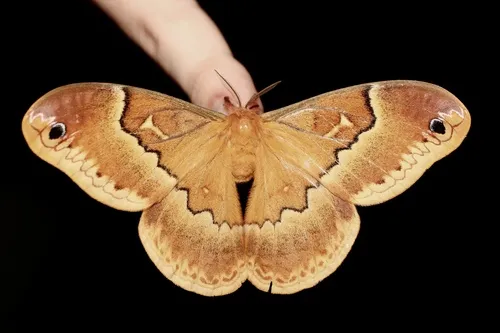
Yellowish brown with yellowish angular cell spots. Spring femles in the extreme south are often yellowish-orange. Males are darker than females and often missing hind wing cell spots. (from Butterflies and Moths of North America) Searching for the cocoons is perhaps the best way to collect these moths; however, based on personal experiences collecting this species across much of its range, greater than half will be out of reach and often parasitized. It's also important to mention that most sweetbay trees keep their leaves throughout the year and searching for the cocoons among the foliated hosts takes effort; therefore, the development of search image is helpful. I also recommend wading boots or a pair of chest waders since this species is most common in mucky flood plains and lowlands where its host plant is abundant. While looking for cocoons, there are parts of the range where you might also want to be wary of wildlife...there's the risk of wild pigs, certain snake species & gators. NOTE: This species is subject to some seasonal variation. Typically, the Spring forms are lighter and brighter and the summer generations are usually darker and/or more washed out in appearance.
Classification
- Kingdom
- Animalia
- Phylum
- Arthropoda
- Class
- Insecta
- Order
- Lepidoptera (Butterflies and Moths)
- Superfamily
- Bombycoidea
- Family
- Saturniidae (Giant Silkworm and Royal Moths)
- Subfamily
- Saturniinae
- Tribe
- Attacini
- Genus
- Callosamia
Imported taxonomy record. Source availability varies; see the source references and editorial policy below.
Habitat and Range
Habitat
SE USA in lowland wetlands and associated forests
Geographic Range
se US (LA-FL-VA) - Map (MPG) Florida, Georgia (southern & coastal), Alabama (southern 2/3rds of the state), Mississippi (southern 2/3rds of the state), Louisiana (much of the state where the host is found), South Carolina (eastern 2/3rds), North Carolina (coastal counties, Sandhills and along the counties of the Fall-line in central NC) & se. Virginia (?)
Seasonal Activity
February-October in Florida March-September across most of the range March/April-August in NC
Diet and Behavior
Diet: Caterpillars feed on Sweetbay, Magnolia virginiana . Some reports put it on other Magnolia sp. (i.e. big leaf magnolia & similar plants?)
Life History
Eggs are laid in short rows on the host plant leaves. Larvae feed gregariously at first, becoming solitary in later instars.
About Butterflies and Moths: the wider group
Order-level background for Lepidoptera, the group containing Callosamia securifera. Species-specific details appear above.
Group overview
Lepidoptera includes approximately 180,000 described species of butterflies and moths. Moths outnumber butterflies roughly 10:1. The monarch butterfly's eastern population has declined by more than 80% since the mid-1990s, and the western population by over 95% since the 1980s. The IUCN lists the migratory monarch as Vulnerable.
Ecological role of the group
Butterflies and moths are essential indicators of ecosystem health. As caterpillars, they are a primary food source for birds - a single nest of blue tit chicks requires ~10,000 caterpillars. Adult moths pollinate many night-blooming plants.
Economic and practical significance of the group
Lepidoptera are critical pollinators. In Europe, grassland butterfly species have declined by almost 50% since the early 1990s. In the UK, three-quarters of butterflies are in decline. In the U.S., five butterfly species have gone extinct since 1950, with 29 listed as endangered.
Recorded sources for this group: IUCN Red List, Xerces Society, USFWS, PNAS, WWF. Imported estimates may describe particular regions or reporting periods.
Photos of Sweetbay Silk Moth - Hodges#7766 (2)
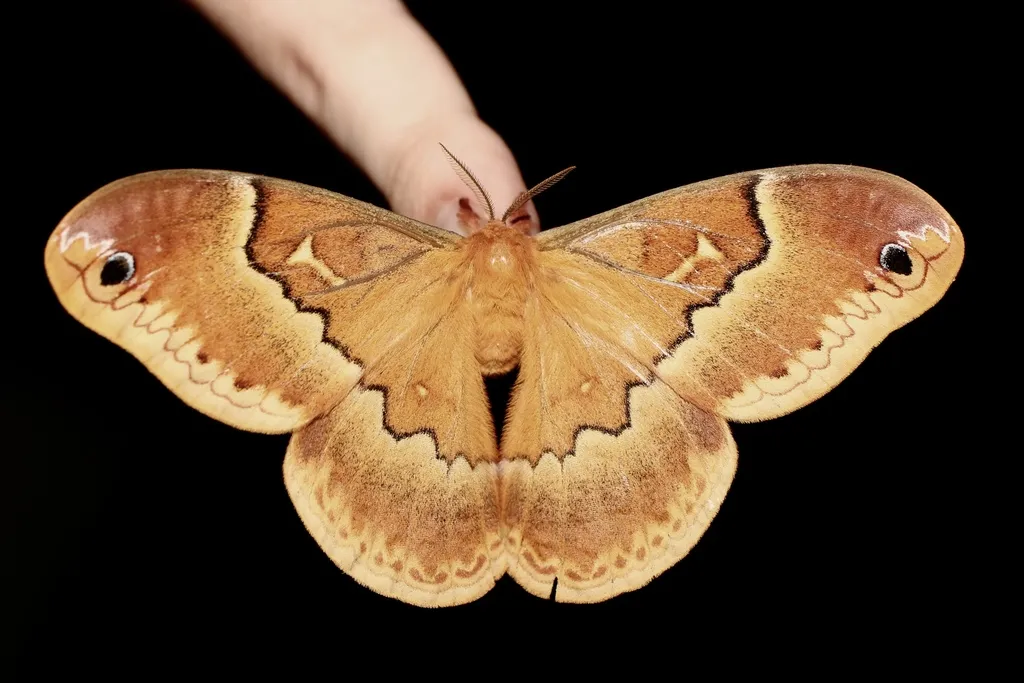
Photo credits: Contributed by Hannah Nendick-Mason; Additional contributions by Mike Quinn , JohnMaxwell22 , Harsi S. Parker , Bill Reynolds
Frequently Asked Questions About Sweetbay Silk Moth - Hodges#7766
What is Sweetbay Silk Moth - Hodges#7766?
Sweetbay Silk Moth - Hodges#7766 (Callosamia securifera) is a species in the family Saturniidae, within the order Lepidoptera.
How do you identify Sweetbay Silk Moth - Hodges#7766?
Yellowish brown with yellowish angular cell spots. Spring femles in the extreme south are often yellowish-orange. Males are darker than females and often missing hind wing cell spots. (from Butterflies and Moths of North America)
Where is Sweetbay Silk Moth - Hodges#7766 found?
| Feature | Details |
|---|---|
| Habitat | SE USA in lowland wetlands and associated forests |
| Range | se US (LA-FL-VA) - Map (MPG) Florida, Georgia (southern & coastal), Alabama (southern 2/3rds of the state), Mississippi (southern 2/3rds of the state), Louisiana (much of the state where the host is found), South Carolina (eastern 2/3rds), North Carolina (coastal counties, Sandhills and along the counties of the Fall-line in central NC) & se. Virginia (?) |
What does Sweetbay Silk Moth - Hodges#7766 eat?
The diet of the Sweetbay Silk Moth - Hodges#7766 includes Caterpillars feed on Sweetbay, Magnolia virginiana . Some reports put it on other Magnolia sp. (i.e. big leaf magnolia & similar plants?).
When is Sweetbay Silk Moth - Hodges#7766 active?
Sweetbay Silk Moth - Hodges#7766: seasonal activity - February-October in Florida March-September across most of the range March/April-August in NC.
What is the life cycle of a Sweetbay Silk Moth - Hodges#7766?
Eggs are laid in short rows on the host plant leaves. Larvae feed gregariously at first, becoming solitary in later instars.