
Oak Skeletonizer Moth - Hodges#0572
Bucculatrix ainsliella
This record describes Bucculatrix ainsliella (species). Recorded family: Bucculatricidae. Recorded order: Lepidoptera.
Identification and Appearance
| Feature | Description |
|---|---|
| Additional details | Description. |
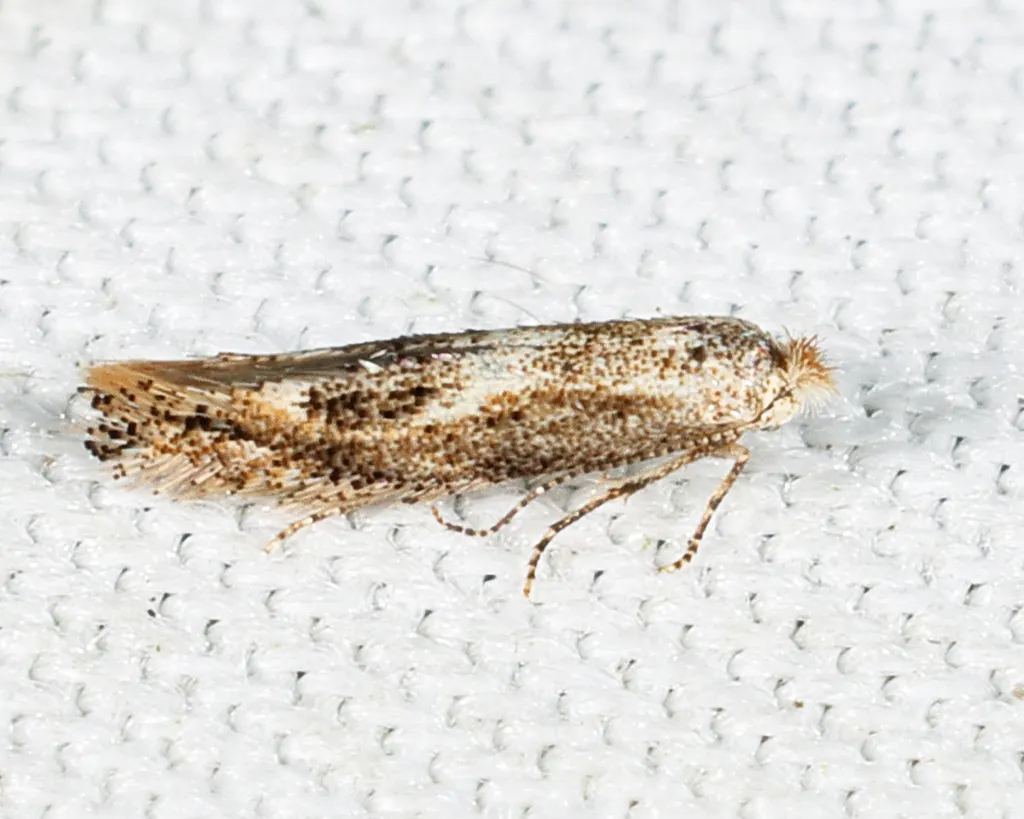
| Head | Head: Creamy white. Hair tuft between antenna creamy white with a distinct wide reddish-brown stripe in center. Antenna: Base (scape) pale yellowish. Antenna with 56 – 62 segments in both sexes; grayish-white with dark brown rings, except last 1/3 of antenna length (23 segments) which are patterned: 3 dark, 1 white, 5 dark, 1 white, 1 dark, 1 white, 5 dark, 1 white, 1 dark and 4 white. |
| Thorax | Thorax: Creamy white, dusted with dark scales; lower border with two ill-defined brown streaks or spots. |
| Forewings | Forewings: Dark brown with purplish sheen to light golden brown more so on males. At mid wing on lower (inner) margin half a dark purplish oval, with a white border at each end, forming an oval when wings are closed. Heavily speckled creamy white area at wing base, along lower (inner) margin. Creamy white patch with dark speckles on last 1/3 of costa widens, leaving only a dark stripe at lower (outer) angle. Scale tufts may be visible at base of wing, base of mid wing oval and near wing tip. Fringe blends with colors of wing. Wing tip fringe has series of curved black dots. |
| Hindwings | Hindwings: Silver-gray. Fringe slightly darker. |
| Legs | Legs: Front and middle legs dark with creamy white rings on shins (tibiae) and feet, underside of legs creamy white. Hind leg creamy white. Shin has some longer slightly darker hairs and a spur. Feet have dark rings. |
| Abdomen | Abdomen: Shiny gray, underside white. Female tip widens with white tuft. Male tip narrows with small tuft. Types: Holotype as Bucculatrix ainsliella male by Murtfeldt, 1905. #65035. Locality: Olmstead, Minnesota. In the United States National Museum, Smithsonian. Cocoons, on/near black oak Quercus velutina , C.N. Ainslie. No photos. |
Wikipedia reference for Bucculatrix ainsliella: http://en.wikipedia.org/wiki/Bucculatrix_ainsliella.
Classification
- Kingdom
- Animalia
- Phylum
- Arthropoda
- Class
- Insecta
- Order
- Lepidoptera (Butterflies and Moths)
- Superfamily
- Gracillarioidea
- Family
- Bucculatricidae (Ribbed Cocoon-maker Moths)
- Genus
- Bucculatrix
Imported taxonomy record. Source availability varies; see the source references and editorial policy below.
Habitat and Range
Habitat
Deciduous forests and areas which have oaks.
Geographic Range
Widespread across southern Canada including British Columbia (introduced in 1999) and northerneastern United States south to Mississippi. , Moth Photographers Group - large map with some collection locations and dates.
Seasonal Activity
Adults are most common in late May, again in late July through August.
Diet and Behavior
Diet: Larval host is Quercus (oak)
Life History
Eggs are laid on the underside of leaves, close to mid rib. The greenish-yellow larvae feed internally, later instars feed on the underside outer leaf surface, leaving the top surface of leaf intact. Larva pupate in a silken cocoon on almost any surface – underside of leaves, in loose bark on the tree, or at ground level on grass blades, moss, etc. Two generations per year, overwintering in cocoons. Overwinters in pupal state.
Additional species information
Species notes from the sources
Etymology: "I have great pleasure in naming this pretty species after Mr. Charles N. Ainslie, of Rochester, Minnesota, from whom I received the cocoons early in the winter." by Mary Murtfeldt.
About Butterflies and Moths: the wider group
Order-level background for Lepidoptera, the group containing Bucculatrix ainsliella. Species-specific details appear above.
Group overview
Lepidoptera includes approximately 180,000 described species of butterflies and moths. Moths outnumber butterflies roughly 10:1. The monarch butterfly's eastern population has declined by more than 80% since the mid-1990s, and the western population by over 95% since the 1980s. The IUCN lists the migratory monarch as Vulnerable.
Ecological role of the group
Butterflies and moths are essential indicators of ecosystem health. As caterpillars, they are a primary food source for birds - a single nest of blue tit chicks requires ~10,000 caterpillars. Adult moths pollinate many night-blooming plants.
Economic and practical significance of the group
Lepidoptera are critical pollinators. In Europe, grassland butterfly species have declined by almost 50% since the early 1990s. In the UK, three-quarters of butterflies are in decline. In the U.S., five butterfly species have gone extinct since 1950, with 29 listed as endangered.
Recorded sources for this group: IUCN Red List, Xerces Society, USFWS, PNAS, WWF. Imported estimates may describe particular regions or reporting periods.
Photos of Oak Skeletonizer Moth - Hodges#0572 (3)
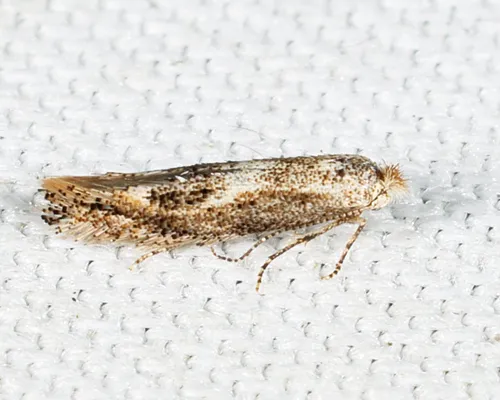
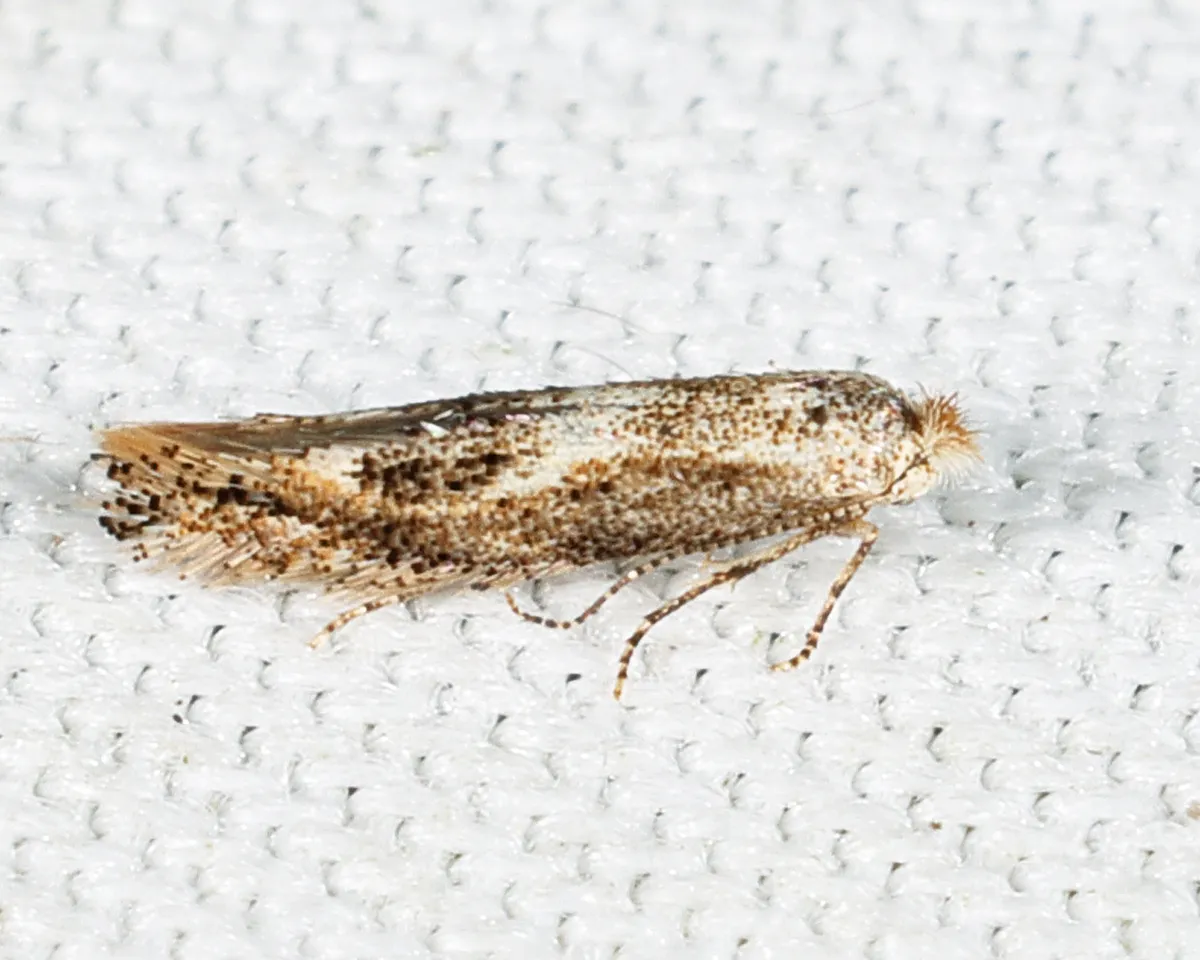
Photo credits: Contributed by Tony; Additional contributions by Steve Nanz , anitagould , Maury Heiman , Randy Hardy , lee_penner
Frequently Asked Questions About Oak Skeletonizer Moth - Hodges#0572
What is Oak Skeletonizer Moth - Hodges#0572?
Oak Skeletonizer Moth - Hodges#0572 (Bucculatrix ainsliella) is a species in the family Bucculatricidae, within the order Lepidoptera.
How big is Oak Skeletonizer Moth - Hodges#0572?
Wingspan 7-8 mm. 4 to 5 mm. long Larva 7 mm. long
How do you identify Oak Skeletonizer Moth - Hodges#0572?
| Feature | Description |
|---|---|
| Additional details | Description. |
| Head | Head: Creamy white. Hair tuft between antenna creamy white with a distinct wide reddish-brown stripe in center. Antenna: Base (scape) pale yellowish. Antenna with 56 – 62 segments in both sexes; grayish-white with dark brown rings, except last 1/3 of antenna length (23 segments) which are patterned: 3 dark, 1 white, 5 dark, 1 white, 1 dark, 1 white, 5 dark, 1 white, 1 dark and 4 white. |
| Thorax | Thorax: Creamy white, dusted with dark scales; lower border with two ill-defined brown streaks or spots. |
| Forewings | Forewings: Dark brown with purplish sheen to light golden brown more so on males. At mid wing on lower (inner) margin half a dark purplish oval, with a white border at each end, forming an oval when wings are closed. Heavily speckled creamy white area at wing base, along lower (inner) margin. Creamy white patch with dark speckles on last 1/3 of costa widens, leaving only a dark stripe at lower (outer) angle. Scale tufts may be visible at base of wing, base of mid wing oval and near wing tip. Fringe blends with colors of wing. Wing tip fringe has series of curved black dots. |
| Hindwings | Hindwings: Silver-gray. Fringe slightly darker. |
| Legs | Legs: Front and middle legs dark with creamy white rings on shins (tibiae) and feet, underside of legs creamy white. Hind leg creamy white. Shin has some longer slightly darker hairs and a spur. Feet have dark rings. |
| Abdomen | Abdomen: Shiny gray, underside white. Female tip widens with white tuft. Male tip narrows with small tuft. |
Where is Oak Skeletonizer Moth - Hodges#0572 found?
| Feature | Details |
|---|---|
| Habitat | Deciduous forests and areas which have oaks. |
| Range | Widespread across southern Canada including British Columbia (introduced in 1999) and northerneastern United States south to Mississippi. , Moth Photographers Group - large map with some collection locations and dates. |
What does Oak Skeletonizer Moth - Hodges#0572 eat?
The diet of the Oak Skeletonizer Moth - Hodges#0572 includes Larval host is Quercus (oak).
When is Oak Skeletonizer Moth - Hodges#0572 active?
Oak Skeletonizer Moth - Hodges#0572: seasonal activity - Adults are most common in late May, again in late July through August..
What is the life cycle of a Oak Skeletonizer Moth - Hodges#0572?
Eggs are laid on the underside of leaves, close to mid rib. The greenish-yellow larvae feed internally, later instars feed on the underside outer leaf surface, leaving the top surface of leaf intact. Larva pupate in a silken cocoon on almost any surface – underside of leaves, in loose bark on the tree, or at ground level on grass blades, moss, etc. Two generations per year, overwintering in cocoons. Overwinters in pupal state.