
Field Cockroach
Blattella vaga
This record describes Blattella vaga (species). Recorded family: Ectobiidae. Recorded order: Blattodea.
Identification and Appearance
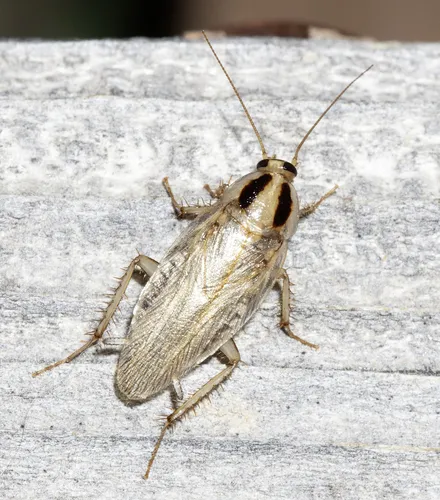
Wikipedia reference for Blattella vaga: http://en.wikipedia.org/wiki/Blattella_vaga.
Classification
- Kingdom
- Animalia
- Phylum
- Arthropoda
- Class
- Insecta
- Order
- Blattodea (Cockroaches and Termites)
- Superfamily
- Blaberoidea
- Family
- Ectobiidae
- Subfamily
- Blattellinae
- Genus
- Blattella
Imported taxonomy record. Source availability varies; see the source references and editorial policy below.
Habitat and Range
Habitat
Can be taken beating woody vegetation (MQ pers. ob.) During the drier part of the year, it temporarily may come into the house in search of moisture. (Suiter & Koehler 2003)
Geographic Range
native to so. Asia, adventive in the New World (sw. US & Mexico) , most common in irrigated regions of so. AZ and so. CA. (Suiter & Koehler 2003)
Diet and Behavior
Diet: mostly decomposing vegetation
Life History
can be completed in ~3 months (Suiter & Koehler 2003)
Additional species information
Species notes from the sources
Etymology: Blattella vaga Hebard 1935
About Cockroaches and Termites: the wider group
Order-level background for Blattodea, the group containing Blattella vaga. Species-specific details appear above.
Group overview
Blattodea includes ~4,600 cockroach species and ~3,000 termite species. Only about 30 cockroach species are associated with human habitats - less than 1% of all species.
Ecological role of the group
Termites contribute ~40% of soil arthropod biomass globally, far exceeding ants at ~10%. Cockroaches are ancient insects dating back 320 million years and are critical decomposers in tropical forest ecosystems, recycling leaf litter and dead wood.
Economic and practical significance of the group
Termites cause $5-30 billion in damage to structures in the U.S. annually. They damage approximately 600,000 American homes each year, with average repair costs of $3,000-$17,000. A subterranean termite colony can consume one pound of wood per day.
Recorded sources for this group: USDA, Orkin, Today's Homeowner, PNAS soil biomass study. Imported estimates may describe particular regions or reporting periods.
Frequently Asked Questions About Field Cockroach
Where is Field Cockroach found?
| Feature | Details |
|---|---|
| Habitat | Can be taken beating woody vegetation (MQ pers. ob.) During the drier part of the year, it temporarily may come into the house in search of moisture. (Suiter & Koehler 2003) |
| Range | native to so. Asia, adventive in the New World (sw. US & Mexico) , most common in irrigated regions of so. AZ and so. CA. (Suiter & Koehler 2003) |
What does Field Cockroach eat?
The diet of the Field Cockroach includes mostly decomposing vegetation.
What is the life cycle of a Field Cockroach?
can be completed in ~3 months (Suiter & Koehler 2003)