
Bistanta herema
This record describes Bistanta herema (species). Recorded family: Thespidae. Recorded order: Mantodea.
Identification and Appearance
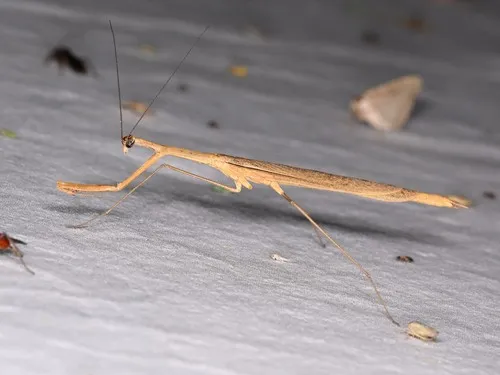
Recently split from B. mexicana ; not known to overlap in range with the other US species produced by this split, B. campestris , so within the genus can be identified safely by location in the USA. Other differences include proportions of pronotum, proportions of supraanal plates, and the forewing apices being tinted brown in B. campestris and clear in B. herema
Classification
About Mantids: the wider group
Order-level background for Mantodea, the group containing Bistanta herema. Species-specific details appear above.
Group overview
Mantodea (praying mantises) includes ~2,400 described species in 430 genera. The praying mantis is the only insect that can turn its head 180 degrees to look over its shoulder.
Ecological role of the group
Mantises are apex insect predators with lightning-fast strike speeds - they can catch prey in as little as 50-70 milliseconds. Some species catch hummingbirds and small lizards. Female mantises sometimes practice sexual cannibalism, consuming the male during or after mating in about 25% of encounters.
Economic and practical significance of the group
Mantises are sold commercially as garden pest control. The Chinese mantis (Tenodera sinensis) was introduced to the U.S. in 1896 for pest control and is now established across the eastern United States.
Recorded sources for this group: Smithsonian, entomology research. Imported estimates may describe particular regions or reporting periods.
Photos of Bistanta herema (2)
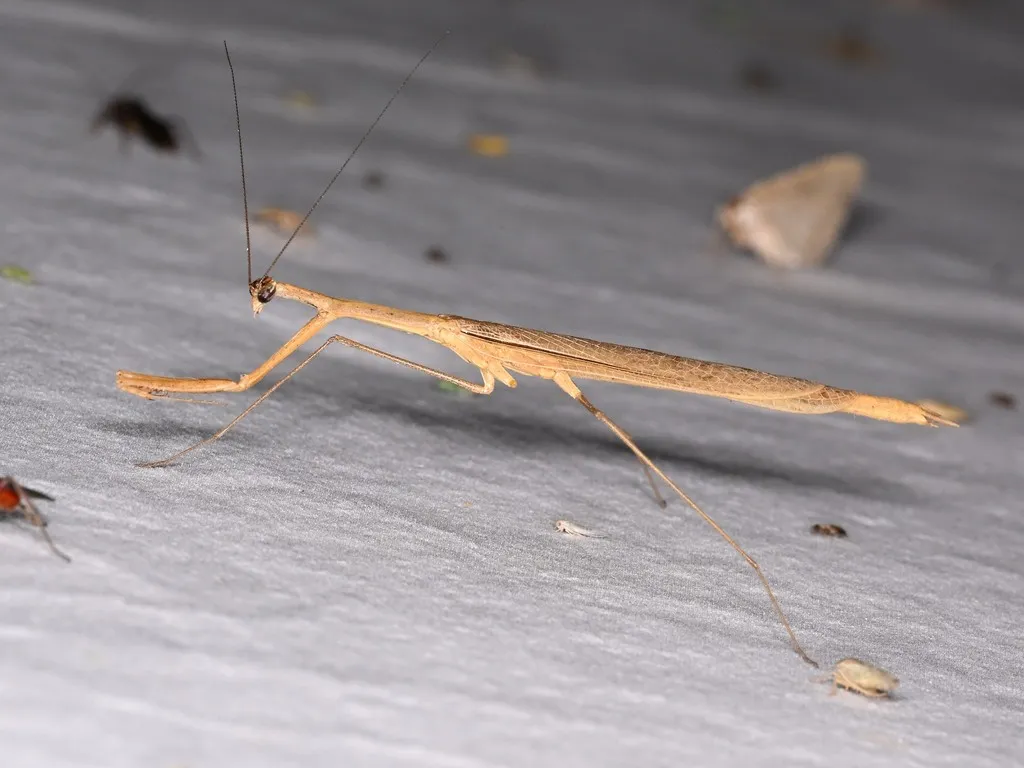
Photo credits: Contributed by Joshua Stuart Rose