
Bertkauia lepicidinaria
This record describes Bertkauia lepicidinaria (species). Recorded family: Epipsocidae. Recorded order: Psocodea.
Identification and Appearance
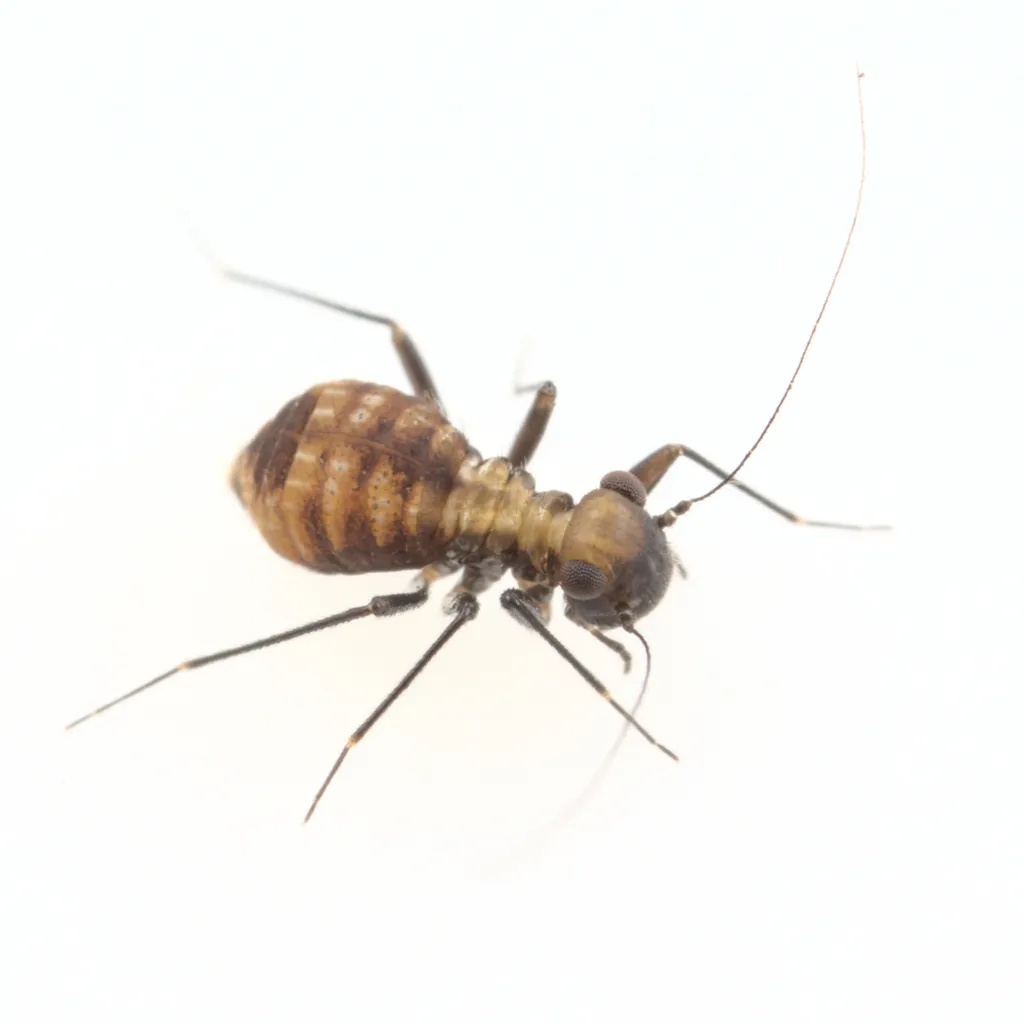
| Feature | Description |
|---|---|
| Additional details | To quote Chapman: Vertex suffused with brown which deepens anteriorly, a large median U-shaped mark of pure orange; remainder of head dark brown ...Antennae dark brown. |
| Thorax | Thorax dull white above; ... |
| Abdomen | Abdomen dull white marked with brown suffused with gray. The pigment is typically distributed as follows: ... above medially elongate, diamond-shaped marks centering on the suture between segments 1 and 2, 2 and 3, while on segments 5 and 6 two broad bands which narrow down to a triangular mark on7 and a line on 8. males extremely rare |
Wikipedia reference for Bertkauia lepicidinaria: https://en.wikipedia.org/wiki/Bertkauia_lepicidinaria.
Classification
- Kingdom
- Animalia
- Phylum
- Arthropoda
- Class
- Insecta
- Order
- Psocodea (Barklice, Booklice, and Parasitic Lice)
- Suborder
- Psocomorpha
- Family
- Epipsocidae (Elliptical Barklice)
- Genus
- Bertkauia
Imported taxonomy record. Source availability varies; see the source references and editorial policy below.
Habitat and Range
Habitat
shaded rock outcrops
Geographic Range
Throughout the eastern U.S. north of the Gulf Coast and east of the Mississippi River and in southern Ontario. ON
Diet and Behavior
Life History
presumed obligatorily telytokous
Additional species information
Species notes from the sources
Etymology: Bertkauia lepicidinaria Chapman 1930
About Barklice, Booklice, and Parasitic Lice: the wider group
Order-level background for Psocodea, the group containing Bertkauia lepicidinaria. Species-specific details appear above.
Group overview
Psocodea includes ~11,000 described species of booklice, barklice, and parasitic lice. Booklice (Psocoptera) are among the most common household insects, thriving in humid environments where they feed on mold and fungi.
Ecological role of the group
Barklice are important decomposers that feed on algae, lichens, and fungi on tree bark. They help recycle nutrients in forest ecosystems. Parasitic lice have co-evolved with their hosts for millions of years, providing insights into host evolutionary history.
Economic and practical significance of the group
Head lice (Pediculus humanus capitis) affect an estimated 6-12 million children aged 3-11 in the U.S. annually (CDC). The U.S. lice treatment market is valued at over $1 billion per year.
Recorded sources for this group: CDC, dermatology research, entomology textbooks. Imported estimates may describe particular regions or reporting periods.
Photos of Bertkauia lepicidinaria (3)
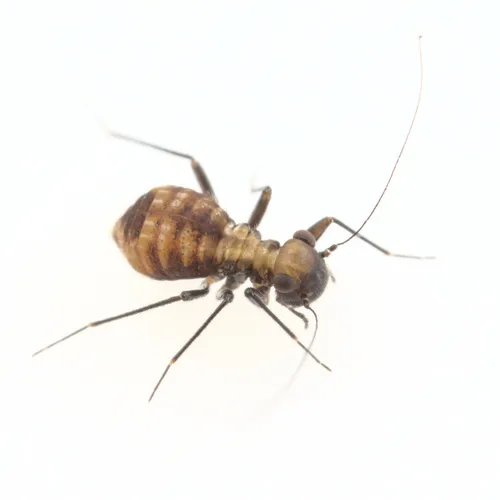
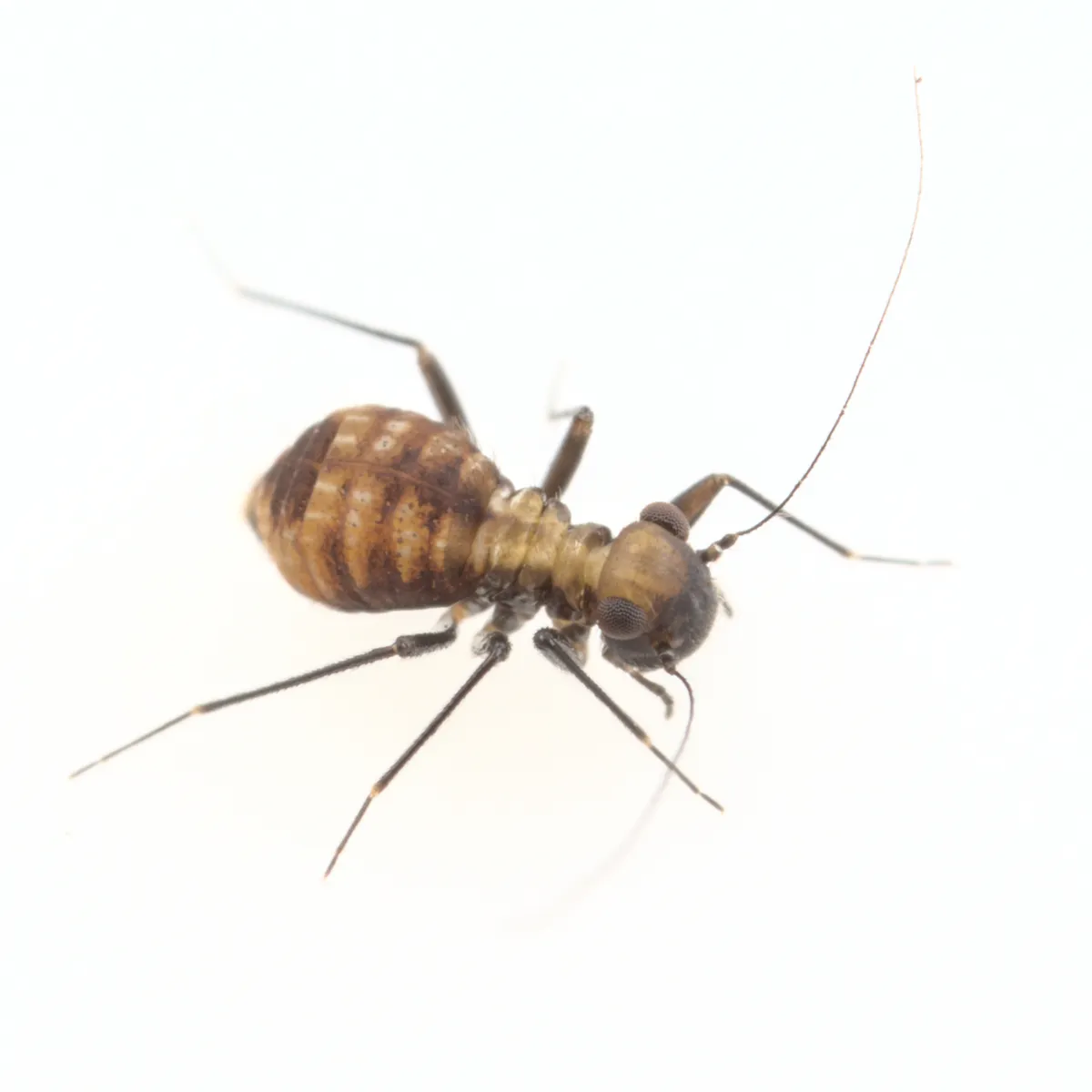
Photo credits: Contributed by v belov; Additional contributions by Diane Young
Frequently Asked Questions About Bertkauia lepicidinaria
What is Bertkauia lepicidinaria?
Bertkauia lepicidinaria is a species in the family Epipsocidae, within the order Psocodea.
How do you identify Bertkauia lepicidinaria?
| Feature | Description |
|---|---|
| Additional details | To quote Chapman: Vertex suffused with brown which deepens anteriorly, a large median U-shaped mark of pure orange; remainder of head dark brown ...Antennae dark brown. |
| Thorax | Thorax dull white above; ... |
| Abdomen | Abdomen dull white marked with brown suffused with gray. The pigment is typically distributed as follows: ... above medially elongate, diamond-shaped marks centering on the suture between segments 1 and 2, 2 and 3, while on segments 5 and 6 two broad bands which narrow down to a triangular mark on7 and a line on 8. |
Where is Bertkauia lepicidinaria found?
| Feature | Details |
|---|---|
| Habitat | shaded rock outcrops |
| Range | Throughout the eastern U.S. north of the Gulf Coast and east of the Mississippi River and in southern Ontario. ON |
What is the life cycle of a Bertkauia lepicidinaria?
presumed obligatorily telytokous