
Austrotyla stephensoni
This record describes Austrotyla stephensoni (species). Recorded family: Conotylidae. Recorded order: Chordeumatida.
Identification and Appearance
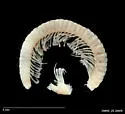
Differs from other congeners in the notched or bifid, coxites of the posterior gonopods (Fig. 10). From A. coloradensis it further differs in the markedly reduced posterior lobe of the anterior gonopods (cf. Figs 5, 6) and the form of the fimbriate branches, which are larger and more strongly curved, and in having fewer ocelli, proportionally longer legs and antennae, and being depigmented (troglobiotic syndrome). In addition, the femoral knobs of the male third and forth legs of colordensis are distal, while in some stephensoni they are mesal (cf. Figs. 3, 4, 7, 8).
Classification
- Kingdom
- Animalia
- Phylum
- Arthropoda
- Class
- Diplopoda
- Order
- Chordeumatida
- Family
- Conotylidae
- Genus
- Austrotyla
Imported taxonomy record. Source availability varies; see the source references and editorial policy below.
Additional species information
Species notes from the sources
Etymology: Austrotyla stephensoni Shear & Steinmann 2013
About Chordeumatida: the wider group
Order-level background for Chordeumatida, the group containing Austrotyla stephensoni. Species-specific details appear above.
Group overview
Chordeumatida includes ~800 described species of small, pale millipedes typically found in leaf litter and caves. Many species are endemic to specific mountain ranges or cave systems, making them important for conservation biology.
Ecological role of the group
These millipedes are important decomposers in cool, moist forest habitats. Their restricted distributions make them valuable indicators of ancient habitat connectivity and refugia from past ice ages.
Economic and practical significance of the group
Chordeumatid millipedes have minimal economic impact. Several cave-dwelling species are critically endangered due to their extremely limited distributions and sensitivity to habitat disturbance.
Recorded sources for this group: Conservation biology, cave fauna research. Imported estimates may describe particular regions or reporting periods.
Photos of Austrotyla stephensoni (3)
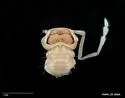
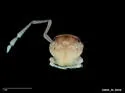
Photo credits: Contributed by Chris Grinter; Additional contributions by v belov