
Arrenurus problecornis
This record describes Arrenurus problecornis (species). Recorded family: Arrenuridae. Recorded order: Trombidiformes.
Identification and Appearance
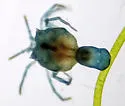
Arrenurus Key - Risk, T. 2022. A key to Arrenurus spp. (Males) in the Florida Department of Environmental Protection reference collection [Based on keys or descriptions in Rutter (1999)] Located at Florida Department of Environmental Protection - Macroinvertebrate Taxonomic Keys
Classification
- Kingdom
- Animalia
- Phylum
- Arthropoda
- Class
- Arachnida
- Order
- Trombidiformes
- Suborder
- Prostigmata
- Superfamily
- Arrenuroidea
- Family
- Arrenuridae
- Genus
- Arrenurus
Imported taxonomy record. Source availability varies; see the source references and editorial policy below.
About Mites: the wider group
Order-level background for Trombidiformes, the group containing Arrenurus problecornis. Species-specific details appear above.
Group overview
Trombidiformes includes ~26,000 described species of mites including velvet mites, chiggers, and spider mites. Spider mites (Tetranychidae) are among the most destructive agricultural pests worldwide.
Ecological role of the group
Velvet mites are important soil predators. Chigger larvae are parasitic on vertebrates and can cause intense itching (trombidiosis). Some mite species are used as biological control agents against pest mites in agriculture.
Economic and practical significance of the group
Spider mites cause billions of dollars in crop damage globally, affecting over 1,100 plant species. The two-spotted spider mite (Tetranychus urticae) has developed resistance to more pesticides than any other arthropod.
Recorded sources for this group: USDA, agricultural pest management research. Imported estimates may describe particular regions or reporting periods.