
Andromeda Lacebug
Stephanitis takeyai
This record describes Stephanitis takeyai (species). Recorded family: Tingidae. Recorded order: Hemiptera.
Identification and Appearance
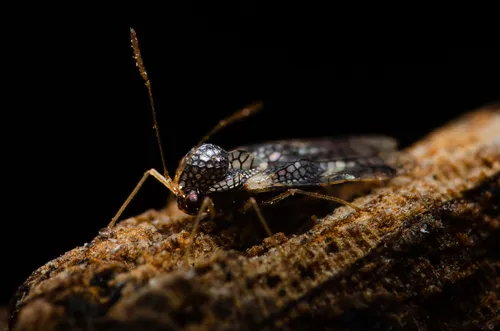
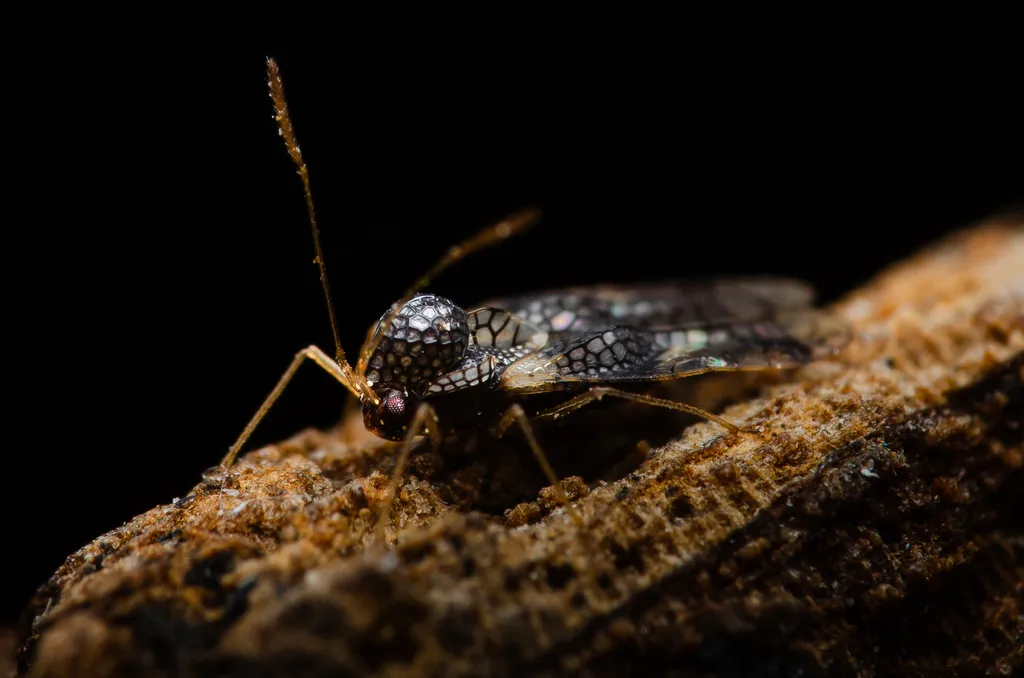
Length about 4 mm. Semi-transparent with a dark ladder pattern. Another introduced species, Stephanitis rhododendri also feeds on Rhododendron and is found locally in southern England, it is similar in size and shape, but has mainly pale wings with a narrow brownish band near the base. Can be identified from good quality photographs, preferable one from directly above and one from the side. Parks and gardens where the host plants occur. There are several generations per year, the bug overwintering as eggs. It is native to Japan, where it feeds on Pieris japonica and has been introduced into the USA and Europe via the plant trade. As well as Pieris , it also uses Rhododendron and azaleas as hostplants and is regarded as a pest in ornamental gardens. This species is a fairly recent arrival in the UK and was first recorded in 1998. Found mainly in south-east England but perhaps more widely now.
Wikipedia reference for Stephanitis takeyai: http://en.wikipedia.org/wiki/Stephanitis_takeyai.
Classification
- Kingdom
- Animalia
- Phylum
- Arthropoda
- Class
- Insecta
- Order
- Hemiptera (True Bugs, Cicadas, Hoppers, Aphids and Allies)
- Suborder
- Heteroptera
- Superfamily
- Miroidea
- Family
- Tingidae (Lace Bugs)
- Subfamily
- Tinginae
- Tribe
- Tingini
- Genus
- Stephanitis
Imported taxonomy record. Source availability varies; see the source references and editorial policy below.
Habitat and Range
Habitat
Parks and gardens where the host plants occur.
Seasonal Activity
Adult: June to November at least.
Diet and Behavior
Life History
There are several generations per year, the bug overwintering as eggs. It is native to Japan, where it feeds on
Additional species information
Recorded status
This species is a fairly recent arrival in the UK and was first recorded in 1998. Found mainly in south-east England but perhaps more widely now.
About True Bugs, Cicadas, Hoppers, Aphids and Allies: the wider group
Order-level background for Hemiptera, the group containing Stephanitis takeyai. Species-specific details appear above.
Group overview
Hemiptera (true bugs) includes over 80,000 described species across cicadas, aphids, leafhoppers, shield bugs, and bed bugs. Aphids alone cost global agriculture an estimated $2.5 billion annually in crop losses.
Ecological role of the group
Many Hemiptera are essential food sources for birds and predatory insects. Cicadas provide massive nutrient pulses during emergence events - a single Brood X emergence can involve trillions of individuals across 15 states.
Economic and practical significance of the group
The brown marmorated stink bug (Halyomorpha halys) caused $37 million in apple crop losses in a single year in the U.S. Mid-Atlantic region. Bed bug infestations in the U.S. increased by 500% between 2001-2010, costing the hotel industry hundreds of millions annually.
Recorded sources for this group: USDA, EPA, University research. Imported estimates may describe particular regions or reporting periods.
Photos of Andromeda Lacebug (2)
Frequently Asked Questions About Andromeda Lacebug
What is Andromeda Lacebug?
Andromeda Lacebug (Stephanitis takeyai) is a species in the family Tingidae, within the order Hemiptera.
How big is Andromeda Lacebug?
about 4 mm. Semi-transparent with a dark ladder pattern.
Where is Andromeda Lacebug found?
Habitat: Parks and gardens where the host plants occur.
When is Andromeda Lacebug active?
Andromeda Lacebug: seasonal activity - Adult: June to November at least..
What is the life cycle of a Andromeda Lacebug?
There are several generations per year, the bug overwintering as eggs. It is native to Japan, where it feeds on